
Sapphire: The King of Gemstones That Hides More Than Just Beauty
26.8.2026
Sapphire combines exceptional aesthetic value with timeless appeal, making it one of the most sought-after coloured gemstones. It will captivate you not only with its rich history but also with its wide range of colours, from classic blue through pink, yellow and green to colourless varieties.
Mineral: Sapphire is the gemstone variety of corundum.
Colour: The term sapphire refers to corundum of every colour except red (which is ruby).
Chemical composition: It is composed of aluminium oxide, Al₂O₃.
Sapphire is one of the best-known and most valuable gemstones. We prize it for its beauty, durability and deeper symbolism. It is most often associated with a rich blue colour reminiscent of the sky or the surface of the sea. In reality, however, this gemstone occurs in a whole palette of shades. Since ancient times, sapphire has symbolised wisdom, loyalty and spiritual depth, which is why it has long been sought after in jewellery and beyond. It holds an important place in ancient legends and adorns famous jewels belonging to royal families. It was often set in them as a “secret stone” believed to protect its recipient through its properties. Together with ruby and emerald, sapphire belongs to the Big Three gemstones. Find out more about the magic that connects these three gemstones and how to choose the perfect coloured gemstone.
Sapphire offers many possibilities for personalising jewellery. From choosing a particular colour shade to incorporating a hidden stone in a ring or selecting it according to the recipient’s date of birth – sapphire, as a birthstone, is associated with September. This gives the beauty you are gifting a deeply personal meaning.
A royal gemstone that is not only blue
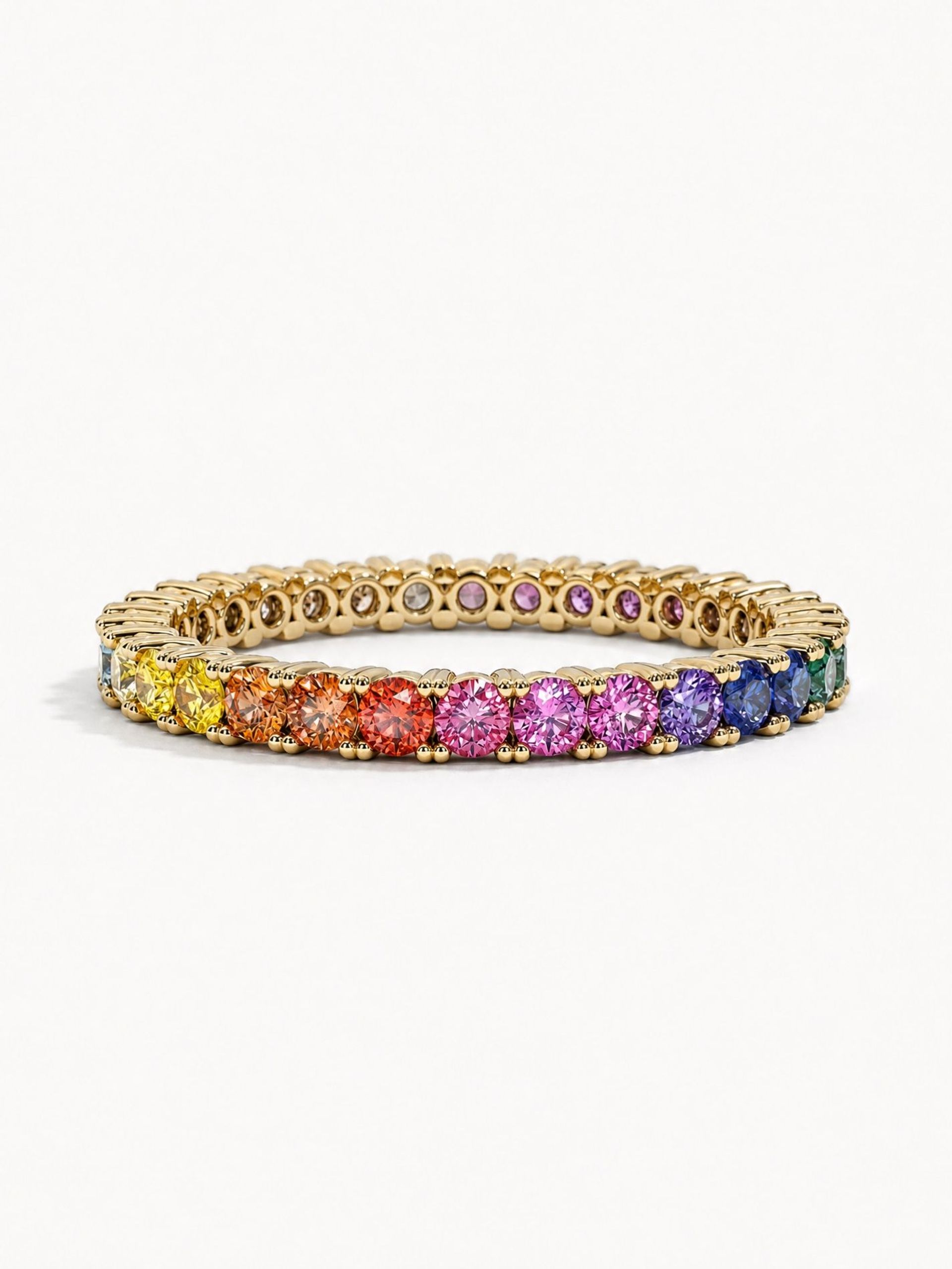
From a mineralogical perspective, sapphire is a single crystal of the mineral corundum, one of the hardest natural substances after diamond. Its rich blue variety is the classic example, and its quality is strongly determined by the intensity and evenness of the colour. Sapphires also occur in yellow, green, violet and orange (or orange-pink). The latter include so-called padparadscha sapphires, among the rarest in the world. Compared with emeralds or rubies, sapphires generally contain fewer inclusions and therefore tend to be cleaner and more durable. Important deposits are found in Sri Lanka, Burma (Myanmar), Thailand, Australia and Madagascar, which produces some of the finest stones in the world.
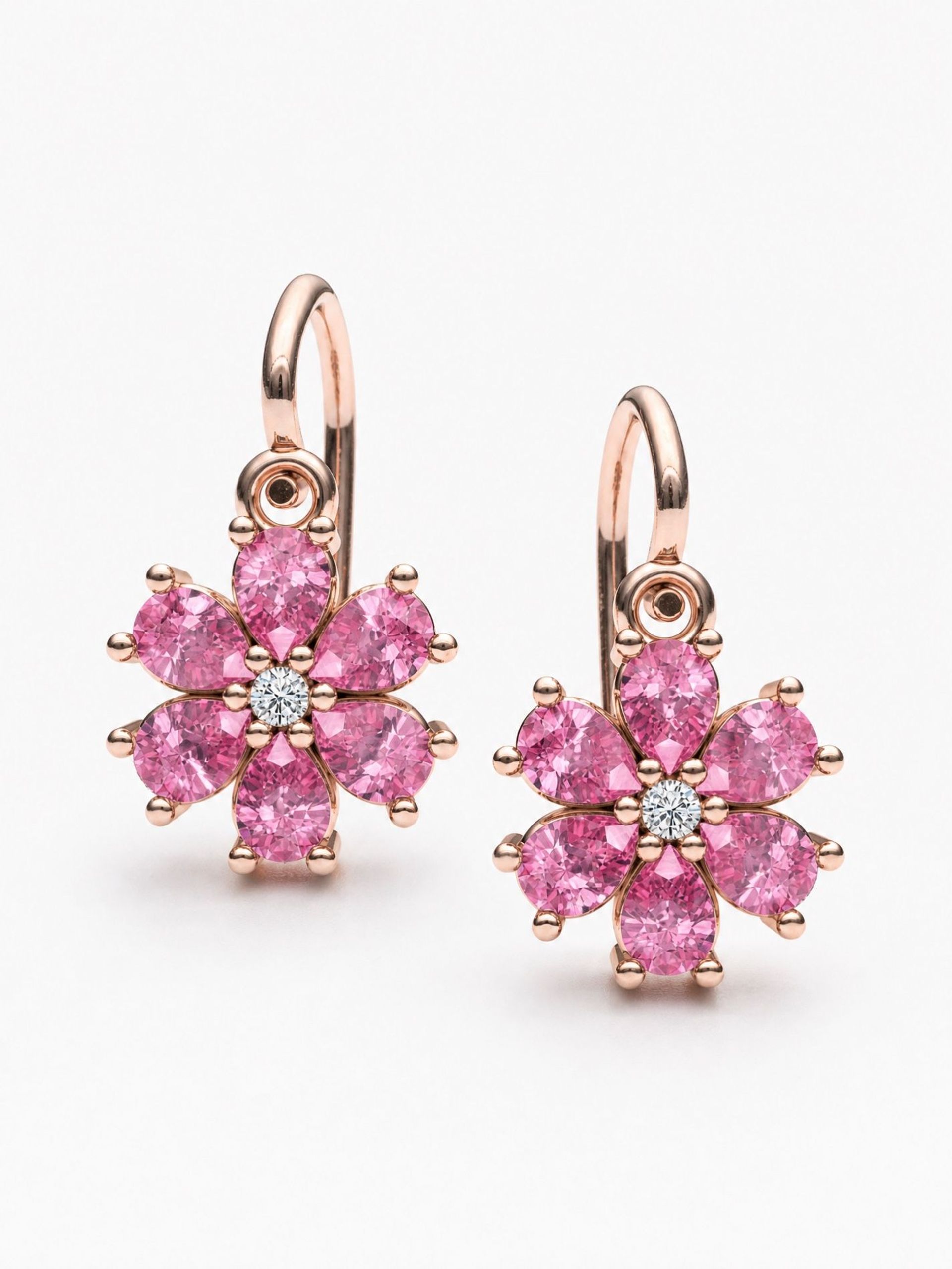
As you already know, sapphires are not only blue. For a little girl, we offer these delicate gold children’s earrings with pink sapphires arranged in a flower shape.
What you may not know about sapphire
A sapphire’s quality is determined primarily by its clarity, cut and colour saturation. The more transparent the stone and the more even its colour, the more valuable it is. A lesser-known fact is that sapphires are also used in industry because of their hardness, for example in the manufacture of watch crystals. You may also not know that in the Middle Ages sapphires were believed to protect against poison and help reveal betrayal. Cups were even made from sapphire to test whether a drink had been poisoned. You may also be interested to know that the largest sapphire in the world weighs more than 1,400 carats. The stone, known as the “Star of Adam”, was found in Sri Lanka. It is a star sapphire whose value is estimated at hundreds of millions of dollars.
Properties and characteristics of sapphire according to GIA
Hardness: 9 on the Mohs scale. Sapphire has very good toughness and no cleavage, making it suitable for jewellery intended for everyday wear.
Origin: Important sources include Kashmir, Myanmar, Sri Lanka and Madagascar. Based on inclusions, chemical composition and other analyses, GIA may issue an expert opinion on geographic origin, although the origin cannot be determined for every stone.
Clarity: Natural sapphires usually contain inclusions, such as fine rutile needles known as silk, mineral crystals, partially healed fractures or colour zoning. Exceptionally clean sapphires are rare.
Typical treatments:The most common treatment is heat treatment, which can improve colour or transparency and is widely accepted in the industry. Another option is lattice diffusion; filling inclusions or dyeing is used less often.
Famous sapphire jewellery
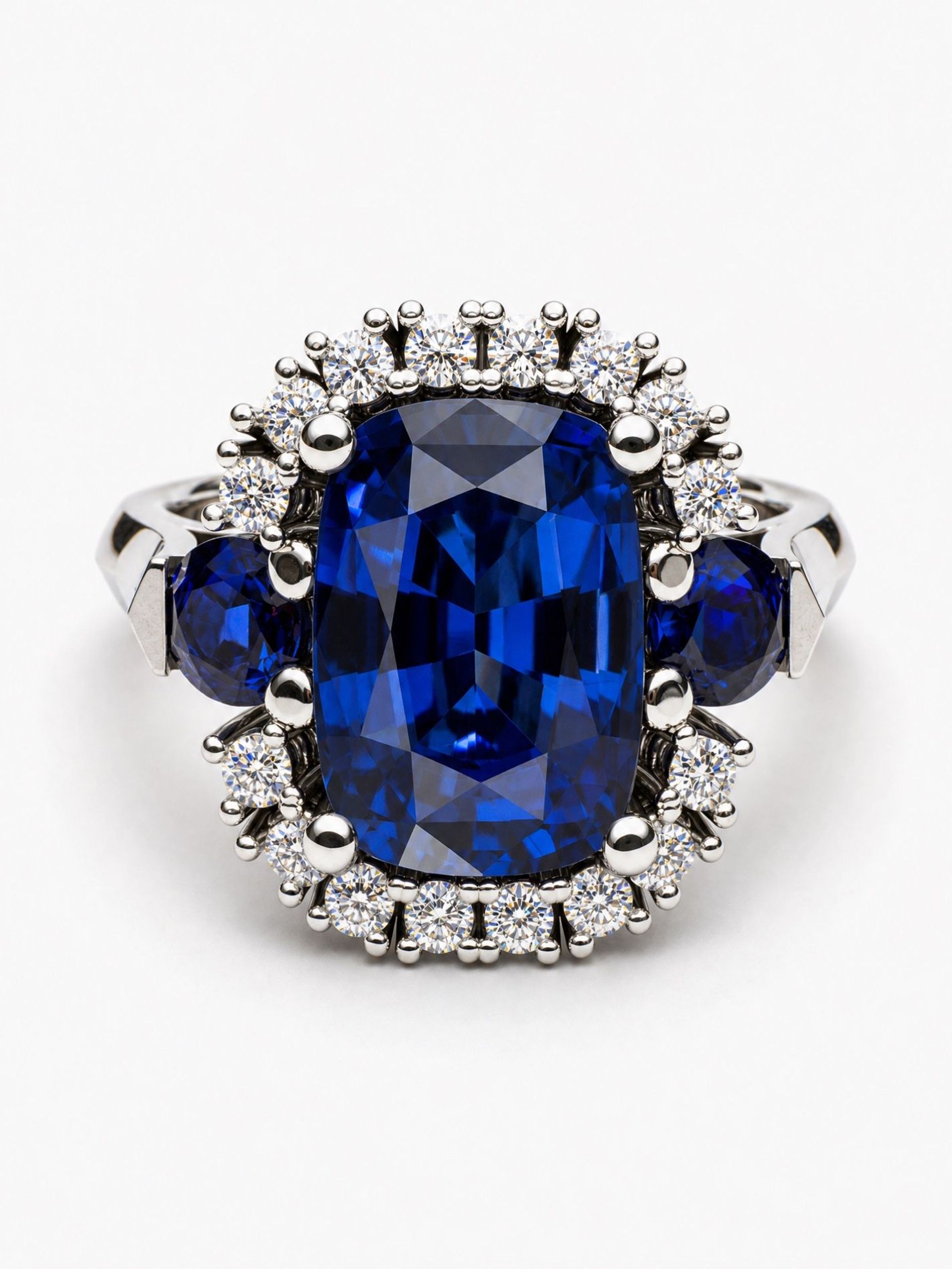
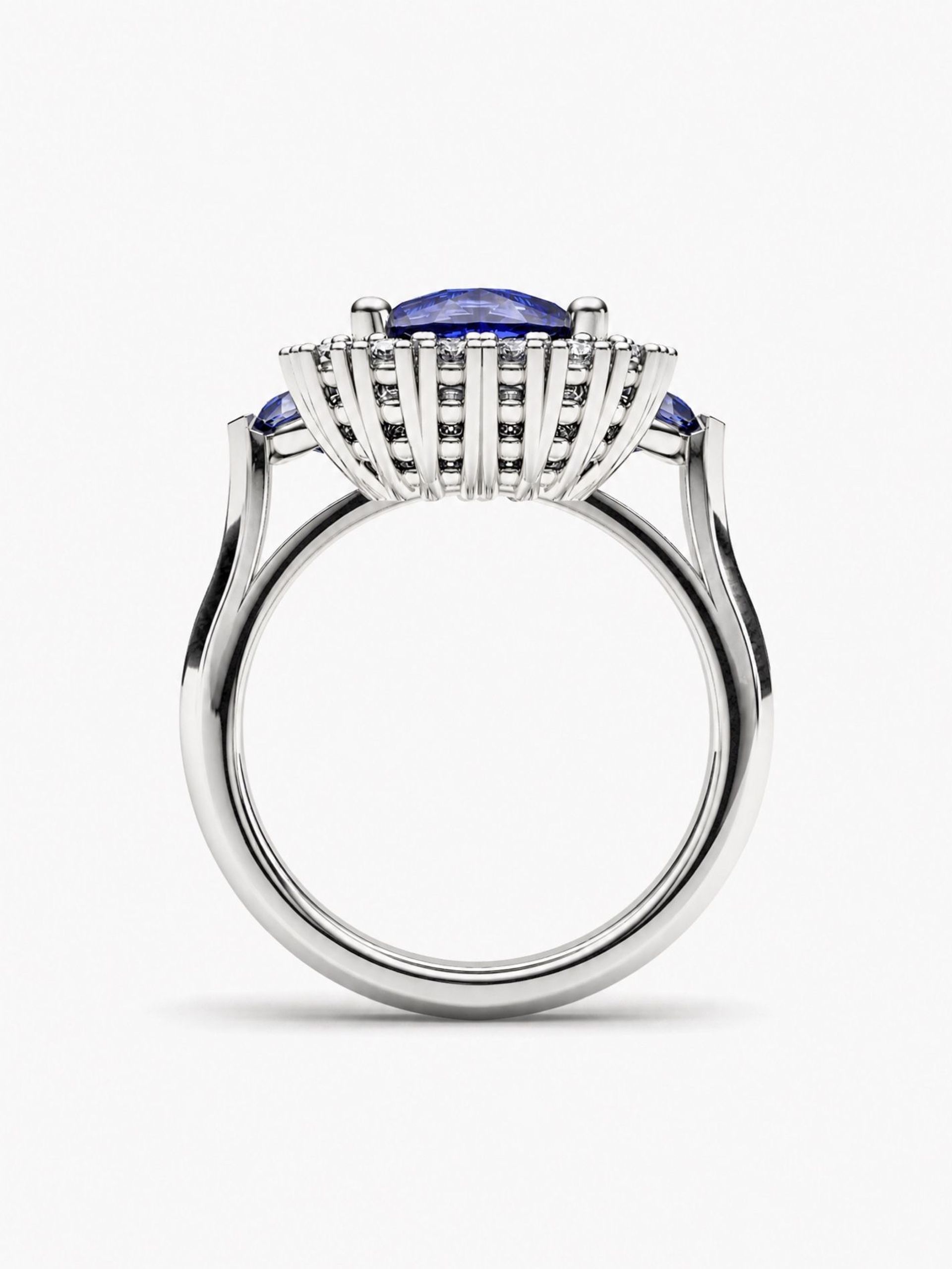
Sapphire is a popular gemstone that adorns many famous pieces of jewellery. We will focus on some of the best known, associated with the British and Belgian royal families. Would you like a piece of jewellery that can connect your family across generations? Original ring ideas featuring this gemstone are varied, and one of Luboš Korbička’s most striking pieces is a ring with a large sapphire and diamonds.
An icon of the British monarchy: the sapphire engagement ring
Among the famous owners of sapphires was Princess Diana, whose iconic sapphire engagement ring is now worn by Kate Middleton, Duchess of Cambridge. The ring features a 12-carat blue sapphire set in white gold and surrounded by fourteen diamonds. It is now one of the iconic jewels of the British royal family.
Queen Elizabeth II’s sapphire brooch
Queen Elizabeth II owned several important sapphire jewels, including Prince Albert’s sapphire brooch, originally given to Queen Victoria by her husband Albert in 1840. The brooch features a large oval sapphire surrounded by diamonds and forms part of the royal family’s inherited jewellery collection.
The Logan Sapphire
It is one of the world’s best-known sapphires. It weighs an incredible 423 carats and is set in a ring with diamonds. Today it is held at the Smithsonian Institution in Washington and is considered one of the rarest gemological treasures.
The Belgian queen’s sapphire tiara
Belgian Queen Marie Henriette owned a magnificent sapphire tiara that has been passed down through generations of the royal family. The tiara is set with sapphires of various sizes and accented with diamonds. Its owner wears it at official state ceremonies.
Sapphires are not only gemstones of dazzling beauty; they are also bearers of stories that connect generations, cultures and continents. Whether they adorn royal jewels, famous rings or legendary tiaras, they always carry a sense of distinction and symbolism.
Technical parameters
Refractive index (RI): Sapphire has a moderately high refractive index of 1.762–1.770, giving it a pronounced vitreous lustre and good brilliance, although it sparkles less than diamond (RI ~2.42).
Density: It is a relatively heavy gemstone with a density of 3.95–4.03 g/cm³, so at the same size it weighs more than most common gemstones (for example, emerald ~2.7 g/cm³).
Crystal system: The gemstone crystallises in the trigonal (rhombohedral) system, often forming six-sided prisms, just like ruby.
Discover your own sapphire. Book an appointment at our Prague showroom or Brno studio and choose a piece of jewellery that is exactly right for you.
Sources:
- GIA (n.d.). Sapphire Care and Cleaning Guide. Gemological Institute of America. Available at: https://www.gia.edu/sapphire-care-cleaning [accessed 2026-07-30].
- Palke, A. C., Saeseaw, S., Renfro, N. D., Sun, Z., & McClure, S. F. (2019). Geographic Origin Determination of Blue Sapphire. Gems & Gemology (Winter 2019). Gemological Institute of America. Available at: https://www.gia.edu/gems-gemology/winter-2019-blue-sapphire-geographic-origin-determination [accessed 2026-07-30].
- GIA (n.d.). Sapphire Quality Factor. Gemological Institute of America. Available at: https://www.gia.edu/sapphire-quality-factor [accessed 2026-07-30].
- GIA (n.d.). Sapphire Buyer’s Guide. Gemological Institute of America. Available at: https://www.gia.edu/sapphire/buyers-guide [accessed 2026-07-30].