
Captivating aquamarine: how to recognise the perfect colour and uncover hidden treatments
7.10.2026
Aquamarine is one of those gemstones in which a single factor can dramatically change both the overall impression and the price of the stone: colour. This gem offers a very broad range of shades, from almost icy blue through blue-green to rarer, richly saturated blue. When choosing a stone, however, its appearance is not the only thing that matters. You need to know whether and how it has been treated. In this article, we explain why routine heat treatment of aquamarine is no cause for concern.
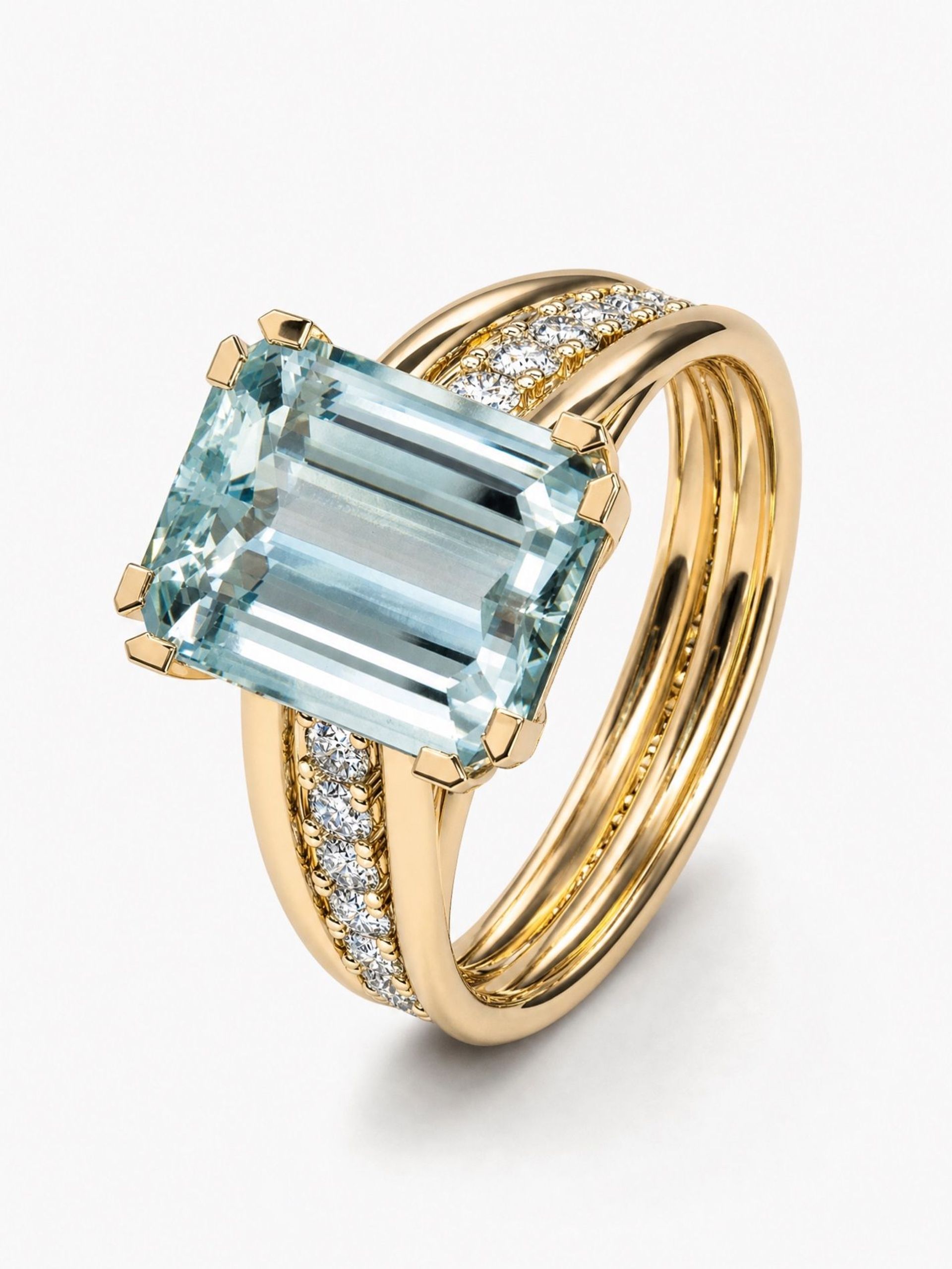

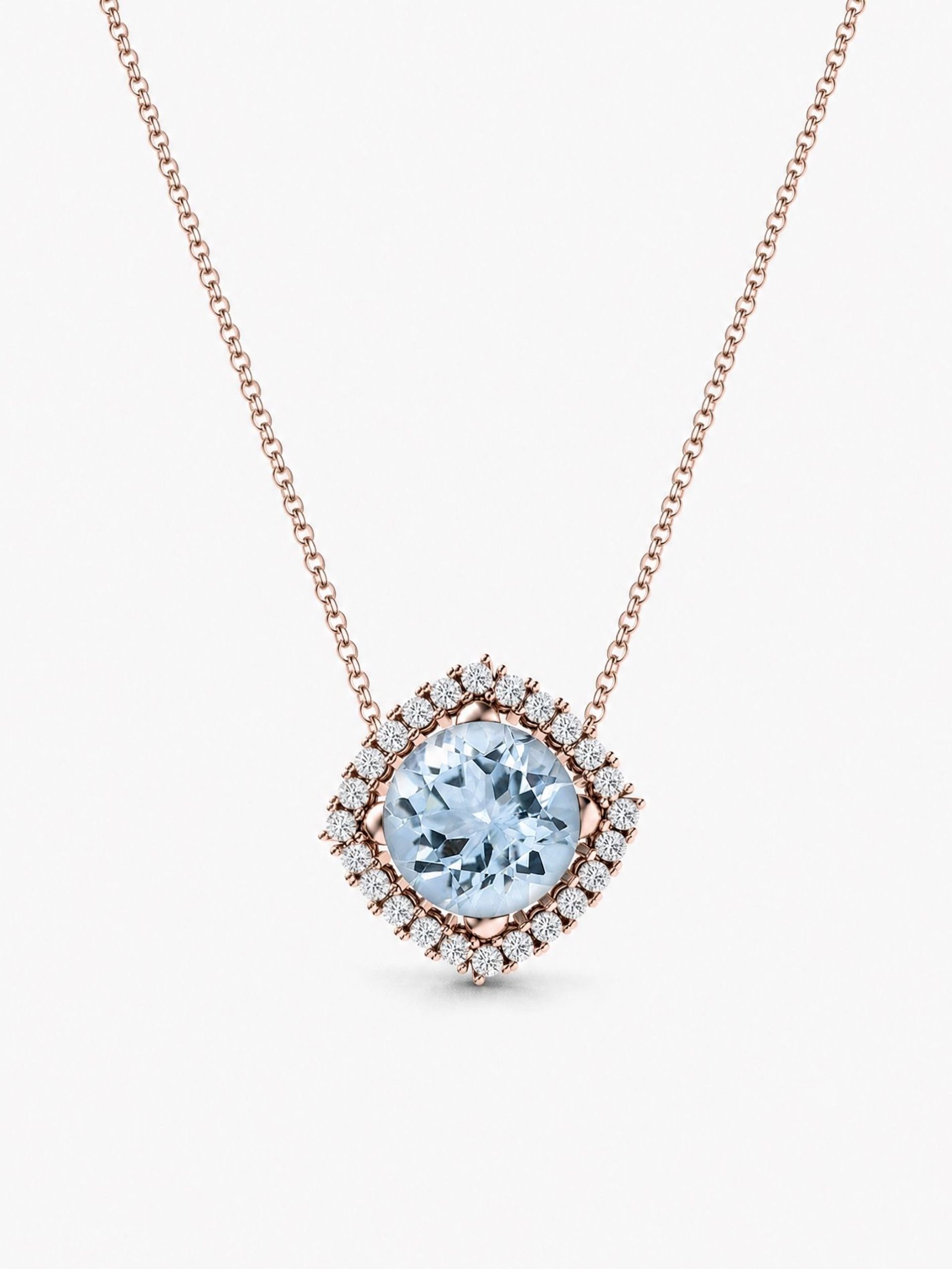
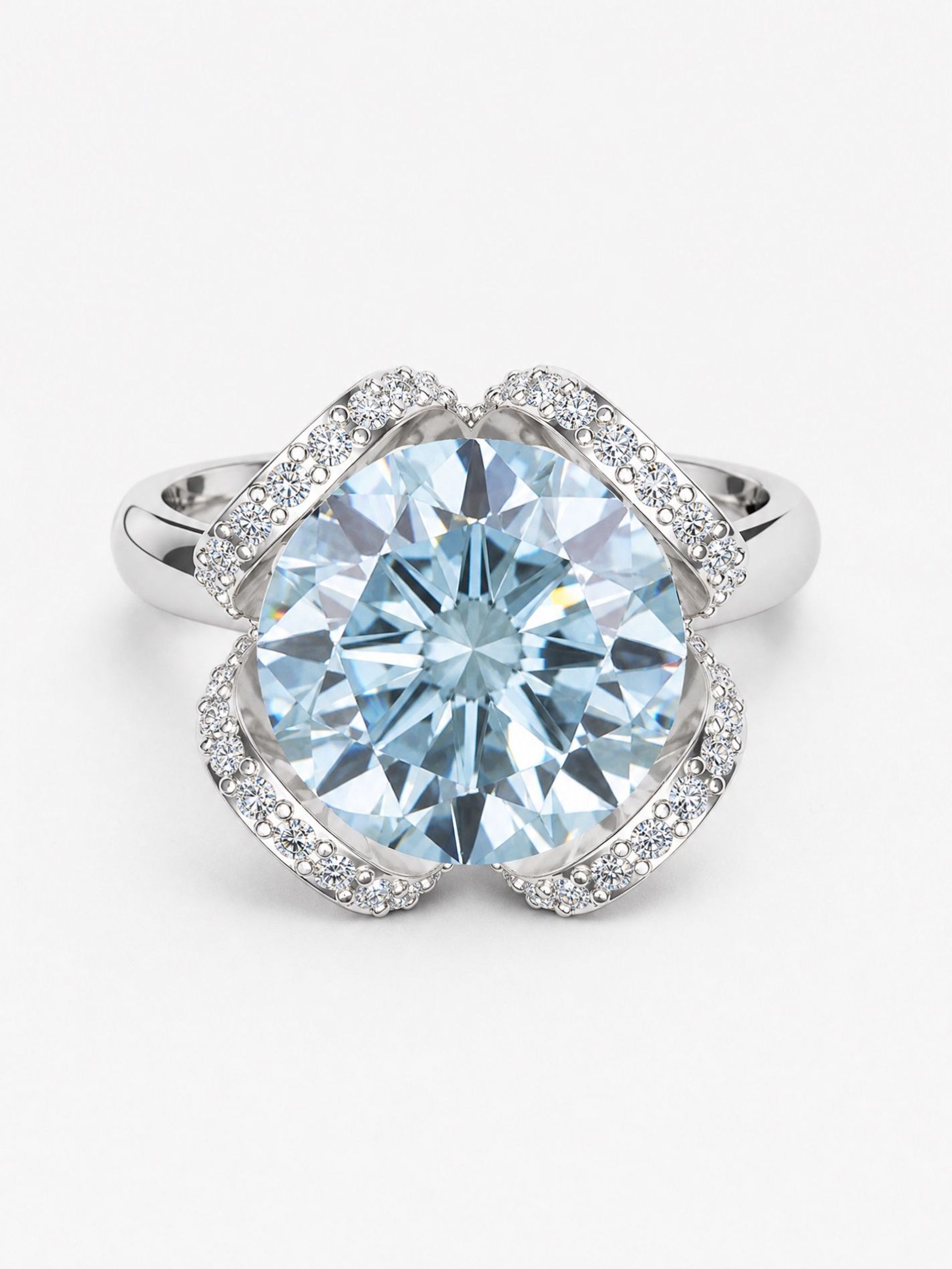
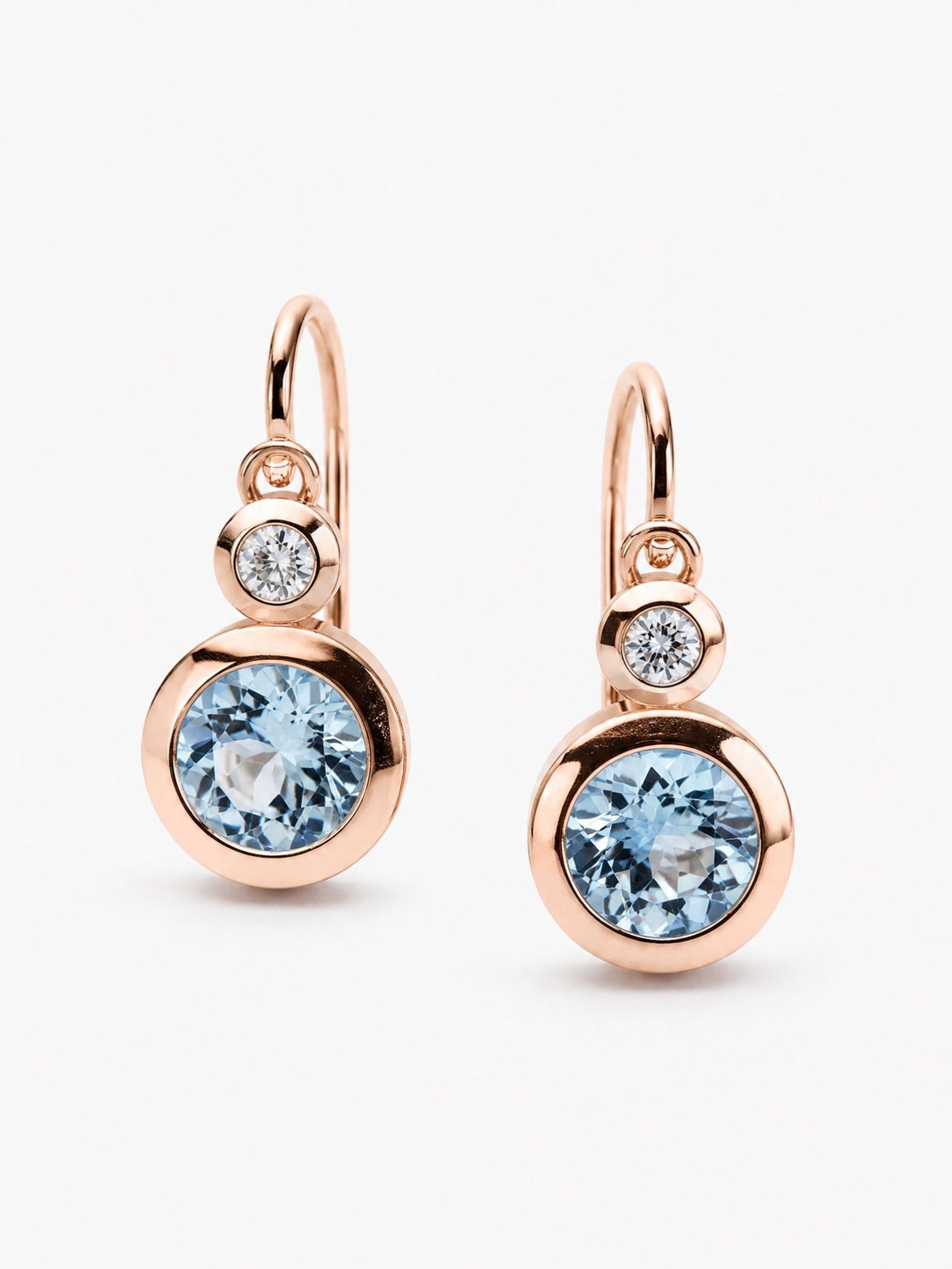
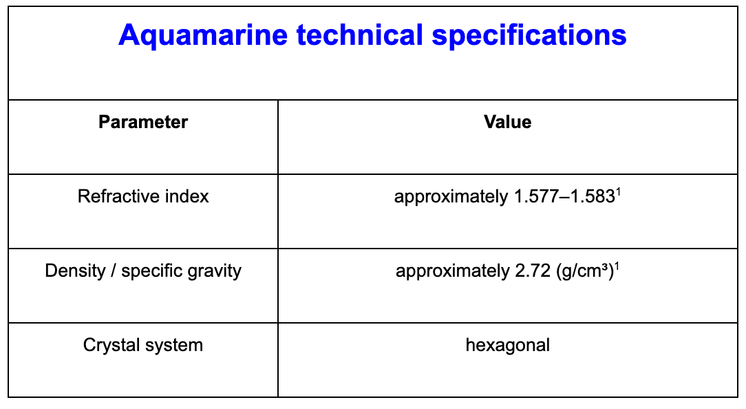
- Mineral: a variety of beryl, belonging to the same mineral group as emerald.1
- Chemical composition: Be₃Al₂Si₆O₁₈.
- Colour: from pale blue-green to more saturated blue.
- Coloration: primarily associated with iron in the crystal structure.5
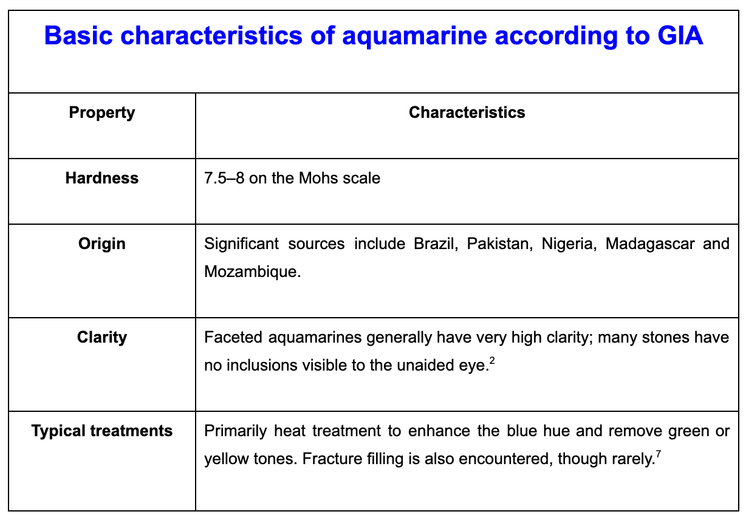
Unlike its relative, emerald, aquamarine often has very high clarity. GIA (the Gemological Institute of America, the world’s most respected authority on diamond and gemstone assessment) states that most faceted aquamarines are “eye-clean”, meaning they have no inclusions visible to the unaided eye.2
Colour matters: why some aquamarines are much more valuable
Many people associate aquamarine with a delicate pale blue. From a gemological perspective, the most desirable stones generally have a stronger, pure blue to slightly greenish-blue colour with sufficient saturation. GIA identifies darker blue to slightly greenish-blue shades with moderately strong colour intensity as the most valuable. As a rule, the purer and more pronounced the blue, the greater the stone’s value.2
This is where the term “Santa Maria” often appears. It originally referred to exceptionally deep blue aquamarines from the Santa Maria de Itabira area in Brazil. Today, the term is also used as a trade name for similarly intense blue stones from other locations.2
The name Santa Maria therefore does not automatically mean that a stone comes from a particular Brazilian deposit. When assessing the value of aquamarine, the actual quality of its colour, clarity and cut matters more than an appealing trade name.2 Other gemstones may be valued differently. Read more about how to choose a coloured gemstone.
The cut matters too
GIA includes cut, alongside colour, clarity and carat weight, among the main factors determining aquamarine quality. Thanks to their high transparency, aquamarines have the potential for pronounced brilliance and sparkle, but the stone must be well cut. An overly shallow cut can create a dull “window” in the centre of the stone, while an overly deep cut can impair its interaction with light.2
A well-designed cut helps to:
- enhance the intensity of the blue,
- distribute light evenly throughout the stone,
- minimise unwanted colour zones,
- make use of aquamarine’s natural pleochroism (a change in colour or hue depending on the angle from which you view it).2
Heat treatment of aquamarine is not a seller’s trick
One common misconception when buying coloured gemstones is that any treated stone is automatically less valuable or of lower quality. Aquamarine is a different case.
Natural rough often contains green or yellowish tones alongside blue. Controlled heating can reduce this component and bring out a purer blue colour. According to research published by GIA, green to yellow-green beryls are heated to approximately 400–500 °C for this purpose. Heat changes the optical behaviour of the iron present within the beryl’s crystal structure.5
The resulting colour is stable. GIA lists heat treatment as a common treatment for aquamarine and notes that a large proportion of aquamarines on the market have been heated specifically to remove a greenish tone and enhance their blue colour.2,4
A heat-treated aquamarine is therefore not a “fake aquamarine”. It is still a natural gemstone. Heating alone is not a sign of low quality either: it is a long-established enhancement method routinely used in the gemstone trade.4
Can you tell whether an aquamarine has been heated?
This is where transparency matters. With some gemstones, a laboratory can identify heat treatment fairly reliably. With aquamarine, this can be considerably more difficult, and in some cases it may not be possible to determine conclusively whether the stone has undergone heat treatment.5
For the customer, it is therefore more important to understand which aquamarine treatments are common and stable, and which interventions require closer attention.
When we recommend taking a closer look
Fracture filling
A small proportion of aquamarines may be treated with a substance that penetrates surface-reaching fractures and makes them less visible. This is a different intervention from routine heating. The filler may be less stable and require gentler care. GIA states that fracture filling is rare in aquamarine, but you may encounter it on the market.7 With a stone treated in this way, it is important that the customer knows about the treatment, as it can affect cleaning methods and the long-term care of the jewellery.
Unusually intense blue beryl
A very dark, electric-blue stone may not be conventional aquamarine. One example is Maxixe and Maxixe-type beryl, whose intense blue colour is associated with natural or artificial irradiation.6
The main concern is stability. The colour of these beryls may gradually fade when exposed to light or heat. They can be distinguished from ordinary aquamarine using gemological and spectroscopic methods.6 This is why you should not choose a stone solely from a photograph or simply seek the most saturated blue possible.
How to recognise a high-quality aquamarine
When choosing, it is worth focusing on several things:
- Examine the stone’s colour under different lighting: A high-quality aquamarine should have an attractive, fairly even blue or slightly greenish-blue colour. The aim is not simply to find the darkest possible stone. What matters is the combination of hue, tone and saturation.2
- Pay attention to the cut: The stone should interact with light across its entire face. A large, transparent “dead” area in the centre may indicate an overly shallow cut.2
- Expect high clarity in a well-cut, high-quality stone: Visible fractures or prominent inclusions are less common in high-quality aquamarines than in emeralds, for example.2
- Ask about treatments: A reputable seller should openly explain which treatments are common for that type of gemstone and whether any are known to have been applied to the particular stone.
- Consider an independent laboratory report for a more valuable stone: For aquamarine, GIA can confirm whether the stone is natural or laboratory-grown and report detectable treatments. However, GIA does not assign aquamarines quality grades as it does diamonds.8
Be wary of designations such as AAA, AA or A as well. There is no standardised international grading scale of this kind for aquamarine. These are individual sellers’ trade designations, so one dealer’s “AAA aquamarine” may not be comparable to a stone bearing the same label elsewhere.9
With aquamarine, transparency matters more than an “untreated” stone
For aquamarine, the claim that a stone has never been altered by human hands is not, on its own, a mark of quality. Jewellery craftsmanship is founded on bringing out the best in natural materials through the right cut and recognised techniques.
Routine heat treatment of aquamarine is a good example. It does not conceal damage to the stone or add an artificial layer of colour to its surface. In natural beryl, it can reduce the yellow or green component and enhance the resulting blue hue.4,5
At the Korbička studio, we recommend choosing a stone based on its actual quality, colour, clarity, cut quality and transparently disclosed treatments. Book an appointment at our studio in Prague or Brno and we will help you choose the right piece of aquamarine jewellery.
A high-quality cut allows us to bring out what matters most in a good aquamarine: its light, clarity and characteristic blue. Sharing the stone’s history before it is set into jewellery is one of our core values as practitioners of honest jewellery craftsmanship.
Sources:
[1] GEMOLOGICAL INSTITUTE OF AMERICA (GIA). Aquamarine – Gem Encyclopedia [online]. [accessed 2026-09-19]. Available at: https://www.gia.edu/aquamarine
[2] GEMOLOGICAL INSTITUTE OF AMERICA (GIA). Aquamarine Quality Factors [online]. [accessed 2026-09-19]. Available at: https://www.gia.edu/aquamarine-quality-factor
[3] GEMOLOGICAL INSTITUTE OF AMERICA (GIA). Aquamarine Buyer’s Guide [online]. [accessed 2026-09-19]. Available at: https://www.gia.edu/aquamarine/buyers-guide
[4] GEMOLOGICAL INSTITUTE OF AMERICA (GIA). An Introduction to Gem Treatments [online]. [accessed 2026-09-19]. Available at: https://www.gia.edu/gem-treatment
[5] GEMOLOGICAL INSTITUTE OF AMERICA (GIA). Color Characteristics of Blue to Yellow Beryl from Multiple Origins. Gems & Gemology [online]. [accessed 2026-09-19]. Available at: https://www.gia.edu/gems-gemology/spring-2020-color-characteristics-blue-to-yellow-beryl
[6] GEMOLOGICAL INSTITUTE OF AMERICA (GIA). Aquamarine, Maxixe-Type Beryl, and Hydrothermal Synthetic Blue Beryl: Analysis and Identification. Gems & Gemology [online]. [accessed 2026-09-19]. Available at: https://www.gia.edu/gems-gemology/fall-2008-aquamarine-beryl-analysis-identification-adamo
[7] GEMOLOGICAL INSTITUTE OF AMERICA (GIA). Aquamarine Care and Cleaning Guide [online]. [accessed 2026-09-19]. Available at: https://www.gia.edu/aquamarine-care-cleaning
[8] GEMOLOGICAL INSTITUTE OF AMERICA (GIA). Does GIA grade aquamarine? [online]. [accessed 2026-09-19]. Available at: https://www.gia.edu/FAQ/gia-faq-grade-aquamarine
[9] GEMOLOGICAL INSTITUTE OF AMERICA (GIA). What does AAA aquamarine mean? [online]. [accessed 2026-09-19]. Available at: https://www.gia.edu/FAQ/gia-faq-aaa-aquamarine